
Early termite signs: what to check and when to arrange an inspection
How to tell winged termites from flying ants, what mud tubes and damaged timber may mean, and why a visual check cannot rule out hidden termites.
By RemovePest ·
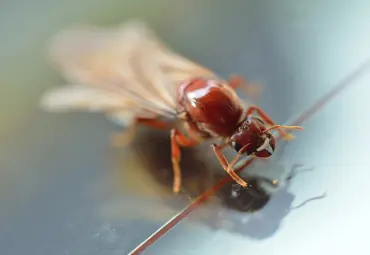
Termite activity can be hidden. A visible clue is a reason to investigate, but the absence of obvious damage does not prove a building is termite-free. The practical goal is to record suspicious signs and arrange a qualified assessment before attempting treatment.
Winged insects or shed wings
EPA explains that a swarm or visible damage may be the first indication of termites. Winged termites can be confused with flying ants. Termites typically have straight antennae, a broadly joined body rather than a pinched waist, and wings of similar length. Ants typically have elbowed antennae, a narrow waist and front wings longer than the rear wings.
These are identification clues, not a guarantee from a blurry photo. Photograph insects or wings if you can do so safely; do not handle unfamiliar insects or disturb a nest.
Mud tubes and suspicious wood damage
Mud tubes on accessible surfaces can be associated with subterranean termite activity. Damaged timber may also warrant investigation. University of California IPM guidance describes subterranean, drywood and dampwood termites separately; they live and feed differently, so not every infestation produces a visible mud tube.
Look at accessible door frames, skirting, timber near moisture and areas where wood meets masonry. Do not dismantle fittings, probe structural timber, climb into unsafe roof spaces or break tubes to conduct a home test. Photograph the location and ask an inspector to interpret it.
Distinguish a clue from a diagnosis
Blistering paint, a sticking door or damaged wood can have causes other than termites; moisture is a common one, and moist wood itself attracts some termite types. One symptom cannot identify the cause. Likewise, as a practical caution, tapping timber and hearing a hollow sound should not be treated as proof either way.
Record when you noticed the change, whether there is a leak nearby and whether it appears to be progressing. Existing photographs, repair records and safely visible evidence may help an inspection. Do not claim a building is structurally safe based on a pest check; suspected structural problems need an appropriately qualified assessment.
Reduce avoidable moisture and access
Repair or report leaks, maintain drainage and avoid storing timber directly against the building where practical; reducing moisture and wood-to-soil contact are prevention measures described by University of California IPM. Preserve necessary ventilation. These are prevention measures, not a replacement for treatment when active infestation is confirmed.
Do not pour household chemicals into suspected termite pathways or use unlabelled products. Treatment depends on the pest, building and extent of activity; product choice and application should follow an inspection and applicable local requirements.
When to get help
Arrange an assessment for suspicious wings, tubes or timber damage rather than waiting for a larger problem. Ask the inspector what evidence was found, what areas were checked, what could not be accessed and whether follow-up is needed. A useful report explains uncertainty as well as findings.
See RemovePest termite control in Mumbai or contact RemovePest for inspection enquiries.
Sources
Termite control in Mumbai · Contact RemovePest
All pest control articles